
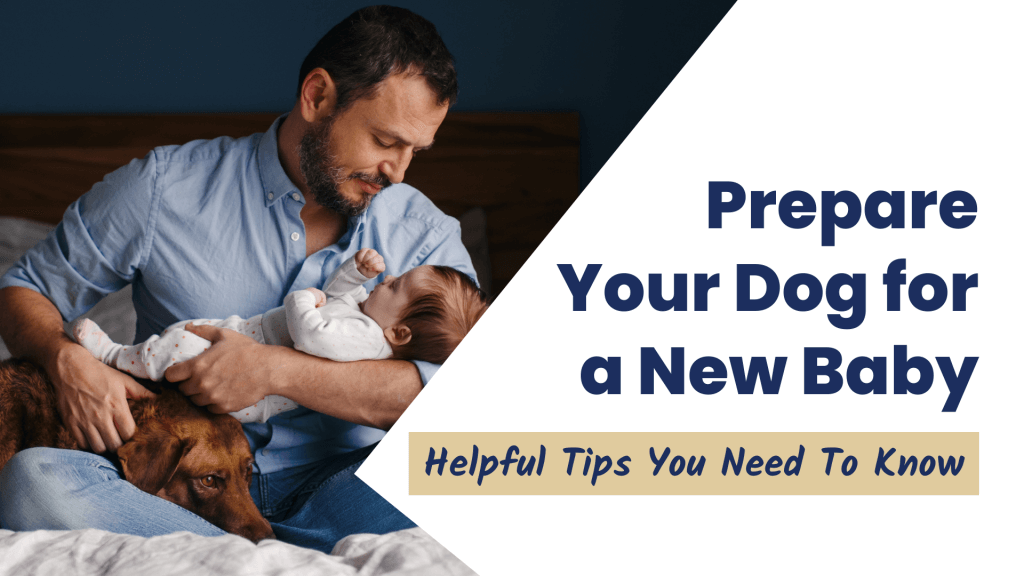
Having a new baby will undoubtedly bring some significant changes in your life and your home…
As a dog owner, it’s crucial to prepare your pup for the arrival of your beautiful baby.
So you may be asking these questions…
“How to prepare a dog for a new baby?”
“Will my dog be okay with a new baby?”
“How can I desensitise my dog to a new baby?”
There is plenty you can work on before the baby comes home. First, though, you need to have somewhere you can separate the dog and baby. A securely closed door or a suitable secure gate can do that, provided the dog cannot get through it or jump over it.
Never leave your dog and baby together without direct adult supervision. You need to be watching what is happening, not just be somewhere nearby. Separate them whenever you cannot do that. It applies just as much to a well-trained dog who has always been good with children.
In this post, we’ll talk about:
- Basic dog obedience training
- How to condition your dog to changes
- Dog behaviour with a new baby
- The importance of socialisation
In this article
Make Sure Your Dog Is Reliably Obedience-Trained
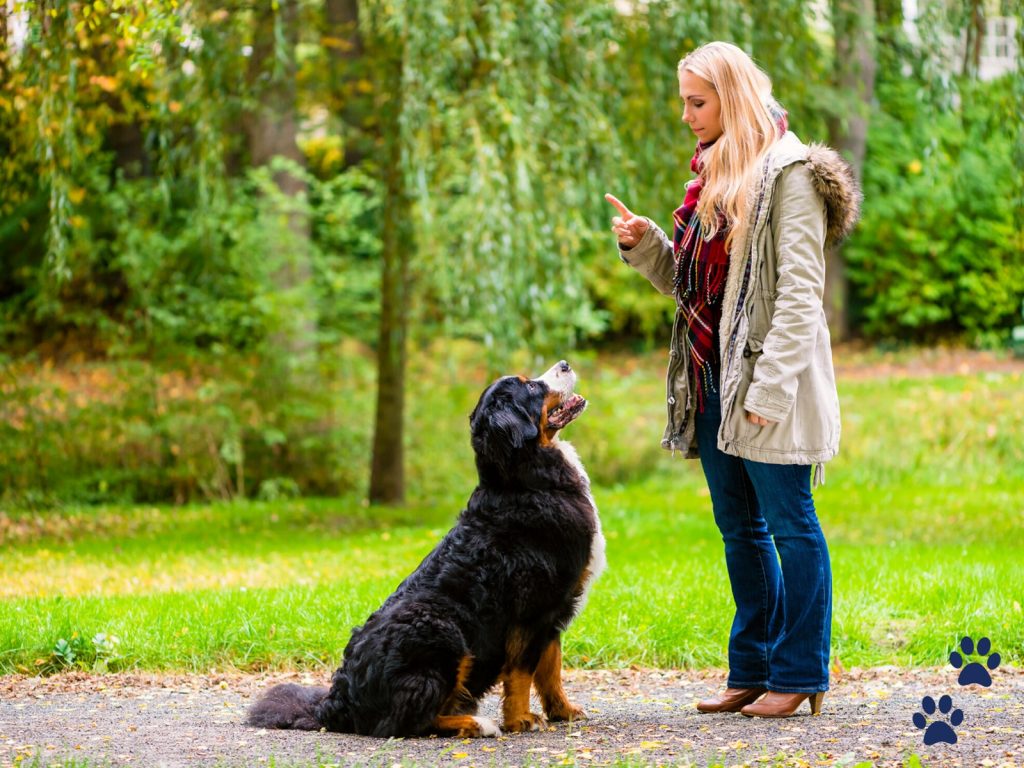
Learning how to teach your dog basic dog commands can make daily life with a baby easier to manage.
If the dog is able to follow commands such as sit, stay, come when called, and lie down on cue…
Then it will be much easier to manage when there’s a baby.
Jumping up and getting underfoot while you are carrying your little one are things to work on before the baby arrives. You can also teach your dog to settle on their bed, away from the baby’s space.
As you know, a well-behaved dog is simply more enjoyable to have around.
If your dog doesn’t know how to do basic obedience commands, now is the perfect time to start teaching him.
Whilst you are working on that, keep using the door or gate to manage the space. Training helps, but it can never replace supervision or make it safe to leave a dog alone with a baby.
Conditioning Your Dog To Changes
The truth is, there will be a lot of changes happening in your home when the baby arrives.
There will be new sounds, smells, sights, and possibly even new furniture.
What you can do is help your dog adjust to these changes by gradually introducing them before the baby arrives.
For example, if you’re using a baby swing, set it up a few weeks in advance and let them get used to it.
You can also start playing recordings of baby sounds, such as crying and laughing, a few weeks before the baby is due. You can find these recordings online or on your phone.
Keep the volume really low to start with. You are trying to get the dog comfortable with the sound, so watch them whilst it is playing. If they are worried or agitated, it is too much for them at that point. Turn it down or stop. You can gradually increase the volume when they are relaxed with it.
We also have to emphasise that getting your dog used to seeing a pram or baby carrier around the house before the baby comes is useful. A pram will probably be coming along on plenty of their daily walks.
To start with, leave the empty pram in your general living area where you and your dog spend time together and allow them to explore it in a relaxed and calm fashion. Once they are used to the pram, slowly start moving it around and reward them for calm behaviour. When the dog is relaxed around the pram inside the house, introduce it to their daily walks, without the baby initially. Take it slowly to allow your dog to settle and become accustomed to the pram being next to them. If the dog is worried, give them more distance and go back a step; please don’t push it at them to make them get used to it.
It’s also worth having a look at where your dog sleeps. If their bed is in a room you won’t want them going into when the baby arrives, make that change beforehand. Give them a comfortable place of their own away from the baby’s space. You can practise having the gate or door closed for short periods whilst you’re there to help them settle.
Dog Behaviour with A New Baby
Even a dog who has always been easy to live with can have a hard time adjusting to a new baby in the house.
Your dog shouldn’t feel left out when the baby arrives. Of course, your baby is the priority. However, it doesn’t mean you should completely ignore your dog.
Make sure to find time each day to give your dog some attention, even if it’s just a quick game of fetch or a belly rub.
Meals and walks are part of that too. Try to keep some predictability for the dog, even though your own day has changed quite a lot. Feed them separately. Their bed, food and chews need to be out of the baby’s reach, and that is something to think about again when your baby starts crawling.
I wouldn’t label a dog jealous just because their behaviour has changed. You want to look at what they are actually doing. Are they turning away or trying to leave? Repeatedly licking their lips, or going stiff? They may be uncomfortable, and that is your cue to end the interaction and give them more room. It isn’t something to keep practising until the dog puts up with it.
If you are seeing growling or snapping, persistent fear or fixation on the baby, keep the dog and baby securely separated and speak to your vet. Ask for a vet with behaviour expertise or a suitably qualified behaviourist before trying any more introductions. Please don’t punish a growl or put them together again to find out whether it happens a second time.
The Importance Of Socialisation
When it comes to introducing your dog to your baby, you must take things slow.
You should never force your dog to meet the baby.
For the first introduction, you need an adult holding the baby and another adult looking after the dog on a lead. Leave enough distance between them that the dog can relax and keep the dog away from the baby’s face. You can reward calm behaviour without bringing them any closer. I wouldn’t use food to lure them towards the baby.
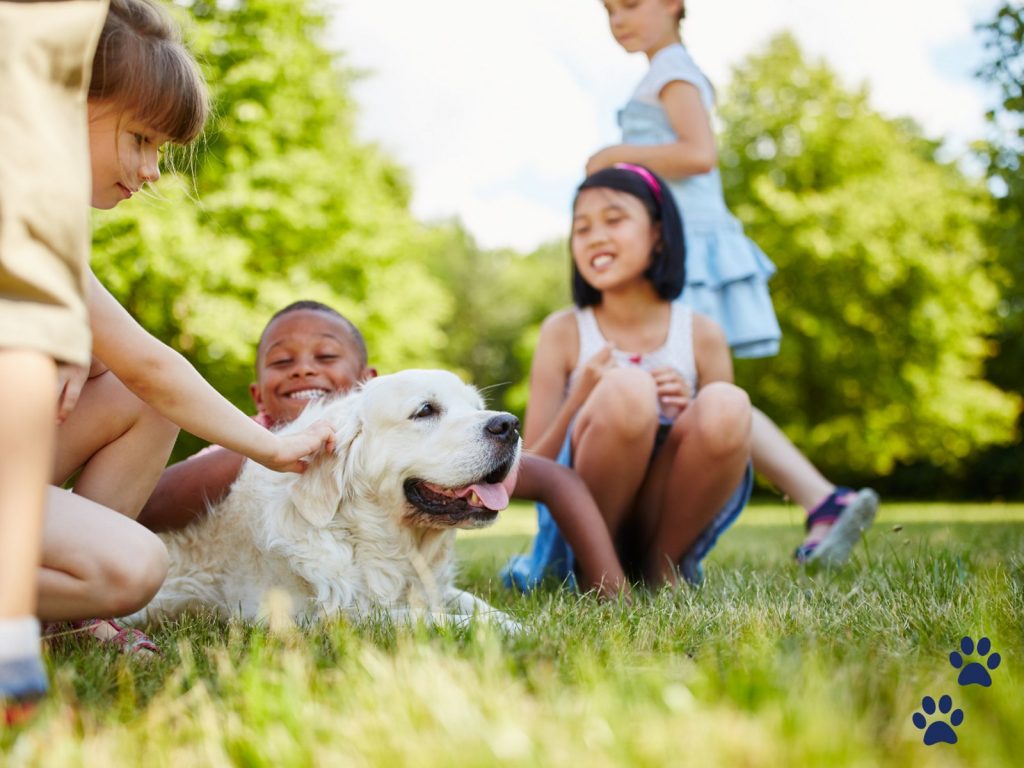
If the dog wants to move away, let them. You don’t have to get a close meeting out of that first introduction. A short time is enough, and if the dog becomes stressed or overexcited, stop. Even if they have been around children before and been perfectly fine, you still need to supervise every interaction with your baby.
For more information, read the RSPCA’s guidance on dogs and newborn babies and Dogs Trust’s advice on introductions.
If you want help with the training before your baby arrives, you can find our private dog training packages here. We would be more than happy to help you get started.
