
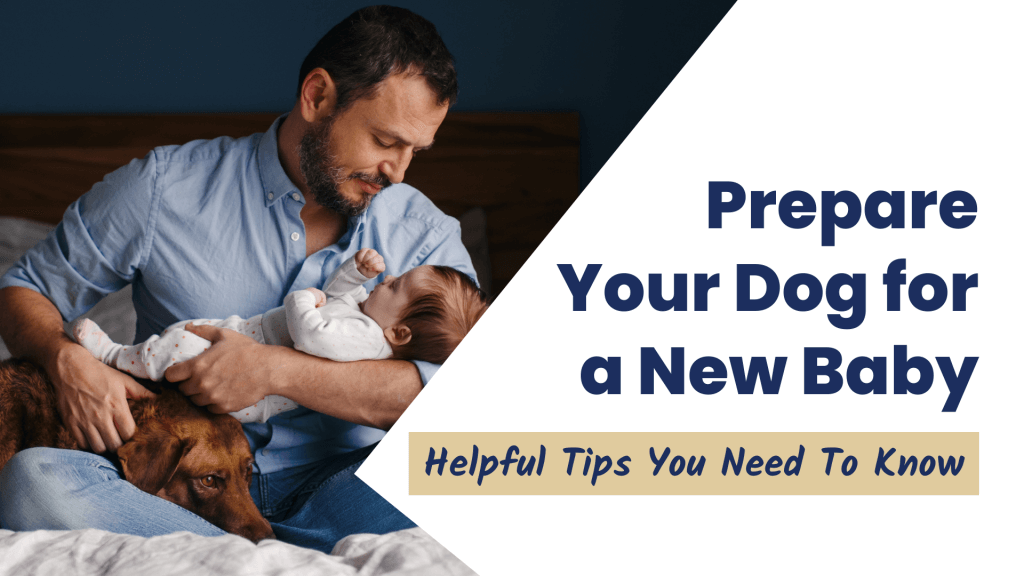
I wrote this after a private dog training session in Caulfield with a fantastic family who were preparing their dogs for a new addition to the family. I always love working with dog and puppy owners who take an active approach, concentrating on teaching good habits instead of having to fix problems further down the track.
There is a lot you can do before the baby arrives. But the first thing to organise is how you will supervise and separate your dog and baby at home.
Never leave a dog and baby together without direct adult supervision. You need to be close and paying attention, able to step in straight away. If you’re cooking dinner, answering the door or looking at your phone, put the dog and baby in separate spaces first. A securely closed door or a suitable gate can do that, provided the dog can’t jump over it or get through. Have this sorted before you bring the baby home.
In this article
Dog obedience training
When you are introducing a new addition to the family, good household manners are something you will greatly appreciate. Being able to call your dog over, have them settle on their bed and keep their feet on the floor will make things easier when your hands are full. If you need help with this, please work with a professional dog trainer before the baby arrives, so you have time to practise.
Obviously, even if your dog is very well trained, you still have to supervise them around the baby. You can’t rely on a sit or a stay to keep them apart. Get your dog comfortable spending time on the other side of the gate or door as well. Start with short periods, while you have time to help them settle, and give them somewhere comfortable to rest. They need to be able to eat, have a chew or sleep without the baby getting near them. That is something to think about again once your child starts crawling.
Conditioning your dog to changes
Before the baby comes, it is also essential to get your dog used to a pram, as this will probably be accompanying them on the majority of their daily walks for the coming years. To start with, leave the empty pram in your general living area where you and your dog spend time together and allow them to explore it in a relaxed and calm fashion. Once they are used to the pram, slowly start moving it around and reward them for calm behaviour.
When the dog is relaxed around the pram inside the house, introduce it to their daily walks, initially without the baby. Take it slowly to allow your dog to settle and become accustomed to the pram being next to them. If they are worried, give them more distance and go back a step. Please don’t push the pram at the dog to make them get used to it.
Any changes to where your dog sleeps or which rooms they can go into should start before the birth too. There will be plenty happening when the baby comes home. Keep meals, walks and some time with you as predictable as you can, and make sure the dog has a quiet spot where they won’t be disturbed.
Socialising your dog
If you have just purchased a puppy and are planning on having a child, a large part of your puppy’s training should be a socialisation program which includes seeing children in a controlled and safe manner. This can be from a distance. They don’t need to go up and meet every child. Please keep in mind there is no rush with this; you want your dog to feel comfortable during the process.
For that first introduction at home, have one adult holding the baby and another looking after the dog on a lead. Give the dog enough distance to relax, keep them away from the baby’s face and reward calm behaviour. If they want to leave, let them. Stop if they become worried or overexcited, rather than trying to get the meeting finished.
A dog turning away, licking their lips repeatedly, going stiff or trying to move away may be uncomfortable. Give them space. If you are seeing growling, snapping, persistent fear or fixation on the baby, keep them securely separated and speak to your vet. Ask for a vet with behaviour expertise or a suitably qualified behaviourist to help before trying any more introductions. Don’t punish a growl or put them together again to see if the dog does it a second time.
More info on preparing your dog for a baby
For a longer read, Dr Lewis Kirkham’s book Tell Your Dog You’re Pregnant covers preparing your dog for the arrival of a baby.
The RSPCA’s guidance on dogs and newborn babies explains supervision and gradual introductions. Dogs Trust’s child and dog safety advice is also useful as your baby grows.
For help practising household manners and preparing for the changes at home, see our private dog training packages.

One Comment
Wow! Such an awesome blog. I had the same experience last year in my country and some of my friends were really enjoyed it. Keep up the good posting.